
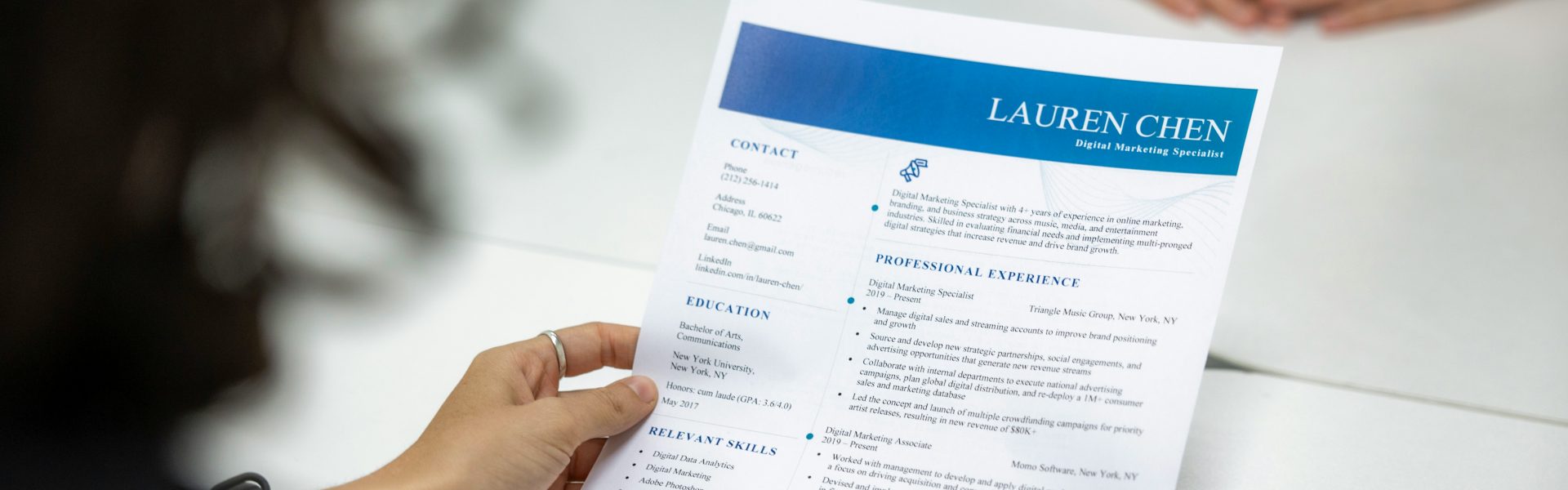

Coded Bias: How AI-Assisted Recruitment Entrenches Gender Inequality in the Labor Market

Abstract — As artificial intelligence becomes embedded in the hiring practices of the world’s largest employers, a critical question emerges: is the algorithm neutral, or does it merely encode the prejudices of the datasets it was trained on? This article examines the mechanisms through which AI-driven recruitment tools reproduce and amplify gender bias, drawing on documented cases, experimental evidence, and emerging regulatory frameworks. It argues that resolving this challenge is not a technical problem alone, but an ethical and interdisciplinary imperative.
Keywords: artificial intelligence, recruitment bias, gender inequality, algorithmic accountability, labor market, HR technology
Introduction
Words and language may appear to be innocent labels, yet over time they function as cogs in a far larger machine. The structure of language alone is not proof of sexism — but there is a reciprocal, mutually reinforcing relationship between language and social perception. Masculine default terms, for instance, automatically evoke male imagery in the mind. The sentence “a doctor came in and said…” leads a significant proportion of readers to picture a male physician. This is less a function of language itself than of the cultural schemas it activates. Yet as those schemas become embedded in language, the likelihood of their materializing in real-world outcomes grows. Language is simultaneously a mirror and a lens: it does not merely reflect the world as it is, but bends it slightly. As the Sapir-Whorf hypothesis suggests, language does not entirely determine thought, but it influences and directs it — making some concepts easier to grasp and others more difficult.
Because artificial intelligence systems are trained through language, they are shaped by data that reflect existing social inequalities. As a consequence, they carry the risk of reproducing — and even reinforcing — the biases present in the labor market. This is no abstract concern: with an estimated 99% of Fortune 500 companies now using some form of automation in their recruitment processes, these linguistic patterns cease to be matters of individual prejudice and become systematic barriers affecting millions of people.
From Algorithm to Discrimination: A Documented Reality
The notion that AI systems might overlook highly qualified female candidates in male-dominated professions is not a hypothetical scenario — it is a documented reality. In 2018, Amazon was forced to abandon an AI-based recruitment tool after it emerged that the system was systematically advantaging male applicants. The root cause was structural: recruitment and human resources recommendation systems are built upon the historical data of previously successful candidates — data that, particularly in technology-oriented roles, has been overwhelmingly drawn from male CVs.
The Euronews investigation into gender bias in hiring tools corroborates this pattern. When a system filters out a woman, no one is held accountable — the algorithm operates in the background, and there is no individual to bear responsibility for a discriminatory decision. As the Gender Policy Report at the University of Minnesota notes, this opacity is precisely what makes algorithmic bias so insidious: it acquires the appearance of objectivity while perpetuating inherited inequity.
The Ethical Framework: What Responsible AI Hiring Requires
If a company has decided to deploy an AI-assisted recruitment system, it must treat this not as a technical preference but as an ethical responsibility. The World Economic Forum has been clear on this point: no organization should blindly trust an algorithm to determine who gets hired. The appropriate use of AI in hiring is as an auditing instrument for one’s own practices — not as a final arbiter.
Transparency is the first and most fundamental requirement. Candidates have the right to know whether their application is being evaluated by an algorithm, as established under frameworks including the Springer Nature review of AI ethics in hiring.
Regular bias auditing constitutes a second essential boundary. Companies that use AI recruitment tools bear an obligation to periodically test, demonstrate, and — where necessary — suspend systems that produce gender-based discrimination. Crucially, the burden of proof must lie with the company. “We were unaware” does not constitute an ethical or legal defence, as the PMC / AI & Ethics literature makes clear.
Human oversight represents a third indispensable layer. The final decision must never rest with the AI alone; the technology should function as one input among several. There is a significant difference between an algorithm declaring “hire this person” and an algorithm flagging “this candidate merits closer attention.” The World Economic Forum guidance is unambiguous on this distinction.
Training data integrity is perhaps the least discussed yet most consequential requirement. Because AI systems have historically learned from a labor market shaped by male dominance, they are liable to replicate that past in their projections of the future. Companies must therefore interrogate the provenance of the data their models consume and invest in diverse, representative datasets — an imperative underscored by research in Nature / Humanities and Social Sciences Communications.
The Legal Reckoning: Accountability in the Courts
The legal world has begun to validate these concerns in landmark ways. The case of Workday — whose AI recruitment tool rejected certain candidates within minutes of application — became a test of a question courts had never formally resolved: can an employer shelter behind the decision of an algorithm? Employment law analysis indicates that the court answered decisively in the negative, establishing for the first time that employers cannot evade liability for discrimination generated by their automated systems.
Regulatory frameworks are now catching up with this judicial logic. New York City became the first jurisdiction to require companies using AI in hiring to notify candidates and submit independent bias audits proving the neutrality of their systems (IAPP). In California, new regulations now mandate that companies retain data inputs, outputs, decision criteria, and audit results from AI systems for a minimum of four years (K&L Gates). And at the international level, UNESCO’s 2021 Recommendation on the Ethics of Artificial Intelligence, adopted by 194 member states, places transparency, fairness, and human oversight at the very center of AI governance (UNESCO).
The Opportunity: AI as a Tool for Equity
It would be a mistake to conclude that AI is irredeemably biased. Human recruiters, after all, are subject to unconscious biases that are immediate, emotional, and inconsistent. The same CV evaluated on a Monday morning and a Friday afternoon may receive different scores. A candidate’s name or photograph can influence an assessor’s judgment in ways they are rarely aware of. Properly constrained and held accountable, AI could meaningfully reduce the human biases that permeate hiring and promotion decisions — a potential documented by PwC in its research on AI and gender equity in the workplace.
Experimental evidence supports this. AssessFirst’s algorithm — focused on personality, motivation, and reasoning rather than credentials — was tested across 208 predictive models and 18 different employers. No gender-based inequality was detected in any of its candidate recommendations. One energy company using the approach accelerated its recruitment process by 30% while simultaneously increasing gender diversity within the organization by 22%.
Furthermore, AI can be deployed not merely to make hiring decisions, but to reveal inequalities that would otherwise remain invisible. Glassdoor’s analytical tools, for example, are capable of identifying gender pay gaps within a workforce or tracking the representation of women in leadership roles — uses that are diagnostic rather than gatekeeping (UN Women).
Experimental work on debiasing algorithms has demonstrated that, without compromising quality standards, such approaches can meaningfully increase the number of female candidates put forward for roles — evidence reviewed by IZA / SAGE Journals.
Oversight Architecture: A Multi-Layered Response
Effective oversight of AI in recruitment must involve several distinct and interlocking layers — none of which should operate on a “set and forget” basis.
Independent bias audits form the first layer. New York City’s legislation offers a model: companies must demonstrate the neutrality of their systems through third-party validation, and must inform candidates that automated evaluation is taking place.
Continuous human review constitutes the second. Companies should regularly examine which candidates technology surfaces — and how those candidates experience the recruitment process. Critically, applicants should be informed when AI is involved in assessing them and afforded the right to contest that assessment or opt for an evaluation conducted without algorithmic involvement (BSR).
Record-keeping requirements form the third layer, and California’s regulatory framework sets the standard: a minimum of four years of data retention covering inputs, outputs, decision criteria, and audit outcomes (K&L Gates).
Underlying all of these layers is a single principle: however complex and automated a system may become, the humans who deploy it remain accountable for the inequalities it produces. “We were unaware” is not a defense — it is an admission of negligence.
Conclusion
AI can serve as a powerful assistant in the hiring process — but it cannot serve as its judge. As this article has argued, the risk is not merely that algorithms perpetuate individual prejudice: it is that they transform individual prejudice into systemic harm at scale. The more decisions an algorithm makes autonomously, the greater the potential for damage.
Positioning AI as a machine of neutrality risks making genuine inequalities invisible rather than resolving them. The more constructive approach is to harness AI’s capacity to surface previously unrecognized gender biases in data — thereby enabling the development of policies that actively promote gender equality in employment (World Bank).
Ultimately, preventing AI from entrenching gender inequality is not a technical problem. It is far broader than that. Only through an interdisciplinary approach — one that brings together computer science, sociology, and gender studies — can AI evolve from a tool that blindly reproduces inequality into one that actively transforms it.
References
Becirovic, A. (2025). AI and gender equality in employment policy [Conference paper]. World Bank. https://thedocs.worldbank.org/en/doc/9fe224595c1ecfe9e508d7f3be205a8d-0080012025/related/S2-8-P-Azra-Becirovic-paper.pdf
BSR. (n.d.). AI in hiring. https://www.bsr.org/en/emerging-issues/ai-in-hiring
[Author(s) — please verify]. (2023). [Article title — please verify]. Humanities and Social Sciences Communications. https://doi.org/10.1038/s41599-023-02079-x
Employment Law Worldview. (n.d.). When artificial intelligence discriminates: Employer compliance in AI hiring (US). https://www.employmentlawworldview.com/when-artificial-intelligence-discriminates-employer-compliance-in-the-rise-of-ai-hiring-us
Euronews. (2022, March 8). Gender bias in recruitment: How AI hiring tools are hindering women’s careers. https://www.euronews.com/next/2022/03/08/gender-bias-in-recruitment-how-ai-hiring-tools-are-hindering-women-s-careers
Gender Policy Report. (n.d.). Algorithmic bias in job hiring. University of Minnesota. https://genderpolicyreport.umn.edu/algorithmic-bias-in-job-hiring
HR Grapevine. (n.d.). Leveraging AI to combat gender bias in hiring: A paradigm shift in recruitment — AssessFirst. https://www.hrgrapevine.com/content/article/leveraging-ai-to-combat-gender-bias-in-hiring-a-paradigm-shift-in-recruitment-assessfirst
[Author(s) — please verify]. (2022). [Article title — please verify]. AI & Ethics. https://doi.org/10.1007/s43681-022-00166-4
IAPP. (n.d.). How the US is handling AI-driven hiring practices. https://iapp.org/news/a/how-the-us-is-handling-ai-driven-hiring-practices/
[Author(s) — please verify]. (2025). [Article title — please verify]. Work, Employment and Society. https://doi.org/10.1177/23794607251353585
K&L Gates. (2025, October 31). AI in recruiting and employment decision-making: New California AI regulations. https://www.klgates.com/AI-in-Recruiting-and-Employment-Decision-Making-New-California-AI-Regulations-Strike-a-Balance-Between-Efficiency-and-Algorithmic-Accountability-10-31-2025
PwC. (n.d.). AI accelerating women’s inclusion in the workplace. https://www.pwc.com/gx/en/about/inclusion/gender-equity/ai-accelerating-womens-inclusion-workplace.html
UNESCO. (2021). Recommendation on the ethics of artificial intelligence. https://www.unesco.org/en/artificial-intelligence/recommendation-ethics
UN Women. (2025, February). How AI reinforces gender bias and what we can do about it. https://www.unwomen.org/en/news-stories/interview/2025/02/how-ai-reinforces-gender-bias-and-what-we-can-do-about-it
University of Washington. (2024, October 31). AI bias in resume screening: Race and gender. https://www.washington.edu/news/2024/10/31/ai-bias-resume-screening-race-gender/
World Economic Forum. (2020, October). AI hiring tools: Bias, recruiting, diversity, fairness and equality. https://www.weforum.org/stories/2020/10/ai-hiring-tools-bias-recruiting-hiring-diversity-fairness-equality